Log in as Plus Member here on plus.helpfulgames.com or go to Base-Ten Blocks on www.helpfulgames.com to play with ads.

Practice place value and number building with base-ten blocks! Learn to recognize hundreds, tens, and ones while solving fun math challenges.
Instructions for Base-Ten Blocks
Welcome to the Base-Ten Blocks Challenge, a fun and interactive way to build strong place value skills! In this game, players use digital base-ten blocks (hundreds, tens, and ones) to model numbers, solve place value puzzles, and strengthen their understanding of how numbers are composed and decomposed.
This game is perfect for students in early elementary grades who are learning:
-
How to represent numbers using base-ten blocks
-
The relationship between ones, tens, and hundreds
-
How to compose and decompose numbers
-
How to compare and order numbers
-
Simple addition with regrouping
Players will drag and drop blocks into place, answer multiple-choice questions, and complete matching tasks that make place value concepts come to life!
-
Get ready to build your number sense—block by block!
Connection to the curriculum
US: Common Core State Standards (CCSS)
- Grade 2 Read and write numbers to 1000 using base-ten numerals, number names, and expanded form.
- Grade 2 Compare two three-digit numbers based on meanings of the hundreds, tens, and ones digits, using >, =, and < symbols to record the results of comparisons.
- Grade 2 Understand that the three digits of a three-digit number represent amounts of hundreds, tens, and ones; e.g., 706 equals 7 hundreds, 0 tens, and 6 ones. Understand the following as special cases:
US: Texas Essential Knowledge and Skills (TEKS)
- Grade 2 use standard, word, and expanded forms to represent numbers up to 1,200
- Grade 2 use concrete and pictorial models to compose and decompose numbers up to 1,200 in more than one way as a sum of so many thousands, hundreds, tens, and ones
- Grade 2 use place value to compare and order whole numbers up to 1,200 using comparative language, numbers, and symbols (>,
Levels, curriculum, knowledge points and medals
1. What Number is This?
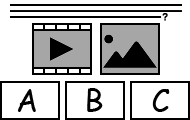 Multiple Choice - The level consists of 3 multiple choice questions (all of which have pictures) and all of them are practiced in every game round. For each question, the player is given three possible answers, only one of which is correct. It is up to the player to choose the correct option. The student has 3 hearts, giving them another chance at missed multiple choice questions during a game round. Questions have text-to-speech in English. Answers have text-to-speech in English. There is no time limit. When the student has selected all the correct answers, the game round is completed. If it is too difficult, the player can click the button labeled Cancel - then the correct answers will be displayed - and try to complete the level again.
- Grade 2 use concrete and pictorial models to compose and decompose numbers up to 1,200 in more than one way as a sum of so many thousands, hundreds, tens, and ones
- Grade 2 Understand that the three digits of a three-digit number represent amounts of hundreds, tens, and ones; e.g., 706 equals 7 hundreds, 0 tens, and 6 ones. Understand the following as special cases:
2. Break It Down! (1)
 Link Up - The level consists of 5 questions (all of which have pictures) and all of them are practiced in every game round. The player's task is to link the 5 questions in the colored boxes with the most appropriate answers in the white boxes. Each colored box can only be linked to one white box and vice versa. The student receives feedback on their links Before submission. The student has 3 hearts, giving them another chance at missed links during a game round. Answers have text-to-speech in English. There is no time limit. When the student has linked all the boxes correctly, the game round is completed. If it is too difficult, the player can click the button labeled Cancel - then the correct links are displayed - and try to complete the level again.
- Grade 2 use concrete and pictorial models to compose and decompose numbers up to 1,200 in more than one way as a sum of so many thousands, hundreds, tens, and ones
- Grade 2 use standard, word, and expanded forms to represent numbers up to 1,200
- Grade 2 Read and write numbers to 1000 using base-ten numerals, number names, and expanded form.
3. Break It Down! (2)
Link Up - The level consists of 5 questions (all of which have pictures) and all of them are practiced in every game round. The player's task is to link the 5 questions in the colored boxes with the most appropriate answers in the white boxes. Each colored box can only be linked to one white box and vice versa. The student receives feedback on their links Before submission. The student has 3 hearts, giving them another chance at missed links during a game round. Questions have text-to-speech in English. Answers have text-to-speech in English. There is no time limit. When the student has linked all the boxes correctly, the game round is completed. If it is too difficult, the player can click the button labeled Cancel - then the correct links are displayed - and try to complete the level again.- Grade 2 use standard, word, and expanded forms to represent numbers up to 1,200
- Grade 2 Read and write numbers to 1000 using base-ten numerals, number names, and expanded form.
4. Break It Down! (3)
Link Up - The level consists of 5 questions and all of them are practiced in every game round. The player's task is to link the 5 questions in the colored boxes with the most appropriate answers in the white boxes. Each colored box can only be linked to one white box and vice versa. The student receives feedback on their links Before submission. The student has 3 hearts, giving them another chance at missed links during a game round. Questions have text-to-speech in English. Answers have text-to-speech in English. There is no time limit. When the student has linked all the boxes correctly, the game round is completed. If it is too difficult, the player can click the button labeled Cancel - then the correct links are displayed - and try to complete the level again.- Grade 2 use standard, word, and expanded forms to represent numbers up to 1,200
- Grade 2 Read and write numbers to 1000 using base-ten numerals, number names, and expanded form.
5. Match the Blocks!
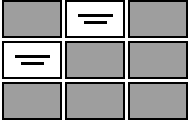 Memory - The level consists of 10 pairs (each consisting of words paired with other words) and all of them are practiced in every game round. The student's task is to find two cards that match. If two matching cards are found, they are removed from the board. The game is finished when all 10 pairs of cards have been found and no cards are left on the board. There is no limit to the number of allowed misses, so the only thing that counts is finding all card pairs. There is no time limit. If it is too difficult, the player can click the button labeled Cancel - then it will show which pairs of cards match - and try to complete the level again.
- Grade 2 use standard, word, and expanded forms to represent numbers up to 1,200
- Grade 2 Read and write numbers to 1000 using base-ten numerals, number names, and expanded form.
6. Which number is bigger?
Multiple Choice - The level consists of 3 multiple choice questions (1 of which have pictures) and all of them are practiced in every game round. For each question, the player is given three possible answers, only one of which is correct. It is up to the player to choose the correct option. The student has 3 hearts, giving them another chance at missed multiple choice questions during a game round. Questions have text-to-speech in English. Answers have text-to-speech in English. There is no time limit. When the student has selected all the correct answers, the game round is completed. If it is too difficult, the player can click the button labeled Cancel - then the correct answers will be displayed - and try to complete the level again.- Grade 2 use place value to compare and order whole numbers up to 1,200 using comparative language, numbers, and symbols (>,
- Grade 2 Compare two three-digit numbers based on meanings of the hundreds, tens, and ones digits, using >, =, and < symbols to record the results of comparisons.
7. Compare numbers-Fill the correct symbol (greater than: > /less than: < /equal to : =)
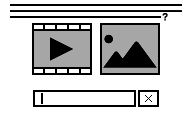 Questions with Text Answers - The level consists of 10 questions and all of them are practiced in every game round. The student must enter the correct answer without any hints and has unlimited number of tries to write the correct word or sentence in each question's text field. Answers are not case-sensitive. The student has 3 hearts, giving them another chance at missed questions during a game round. The student does not receive any feedback when writing the answer, which makes the task a bit more difficult. Questions have text-to-speech in English. There is no time limit. When the student has written all the answers correctly, the game round is completed. If it is too difficult, the player can click the button labeled Cancel - then the correct answers will be displayed - and try to complete the level again.
- Grade 2 use place value to compare and order whole numbers up to 1,200 using comparative language, numbers, and symbols (>,
- Grade 2 Compare two three-digit numbers based on meanings of the hundreds, tens, and ones digits, using >, =, and < symbols to record the results of comparisons.
Calculation of knowledge points and medals
- Bronze medal: after completing 2 rounds.
- Silver medal: after completing 5 rounds.
- Gold medal: after completing 10 rounds.